

Total Access Scaffolding provides specialist scaffolding for heritage and listed building projects across the Lake District, South Lakeland and the wider Cumbria region. Our coverage area contains one of the highest concentrations of listed buildings and conservation areas in England, and working on these properties demands scaffolding that is designed, erected and managed with sensitivity to historic fabric at every stage.
Heritage scaffolding is not simply standard scaffolding with extra care. It requires specific technical measures — padded fittings, non-marking ties, carefully planned fixing positions, heritage-grade scaffold boards and configurations that minimise visual impact on the setting. We implement these measures as standard on every heritage installation, not as an optional extra.
We work on heritage projects across the region, from medieval churches and Priory buildings to Georgian townhouses, Victorian civic structures, traditional Lakeland farmsteads and chimney scaffolding works. Our experience covers projects in Cockermouth, Whitehaven, Keswick, Ambleside, Grange-over-Sands and throughout the Lake District National Park.

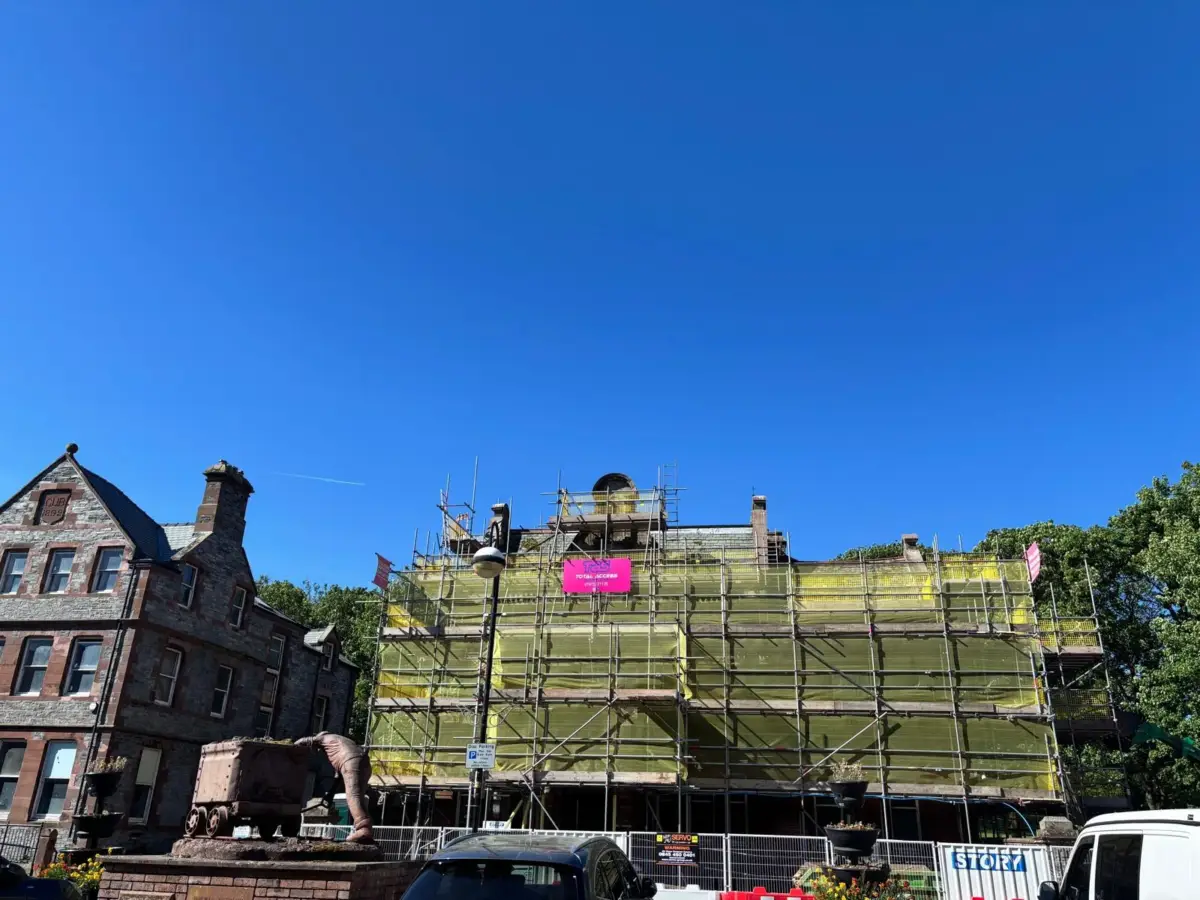
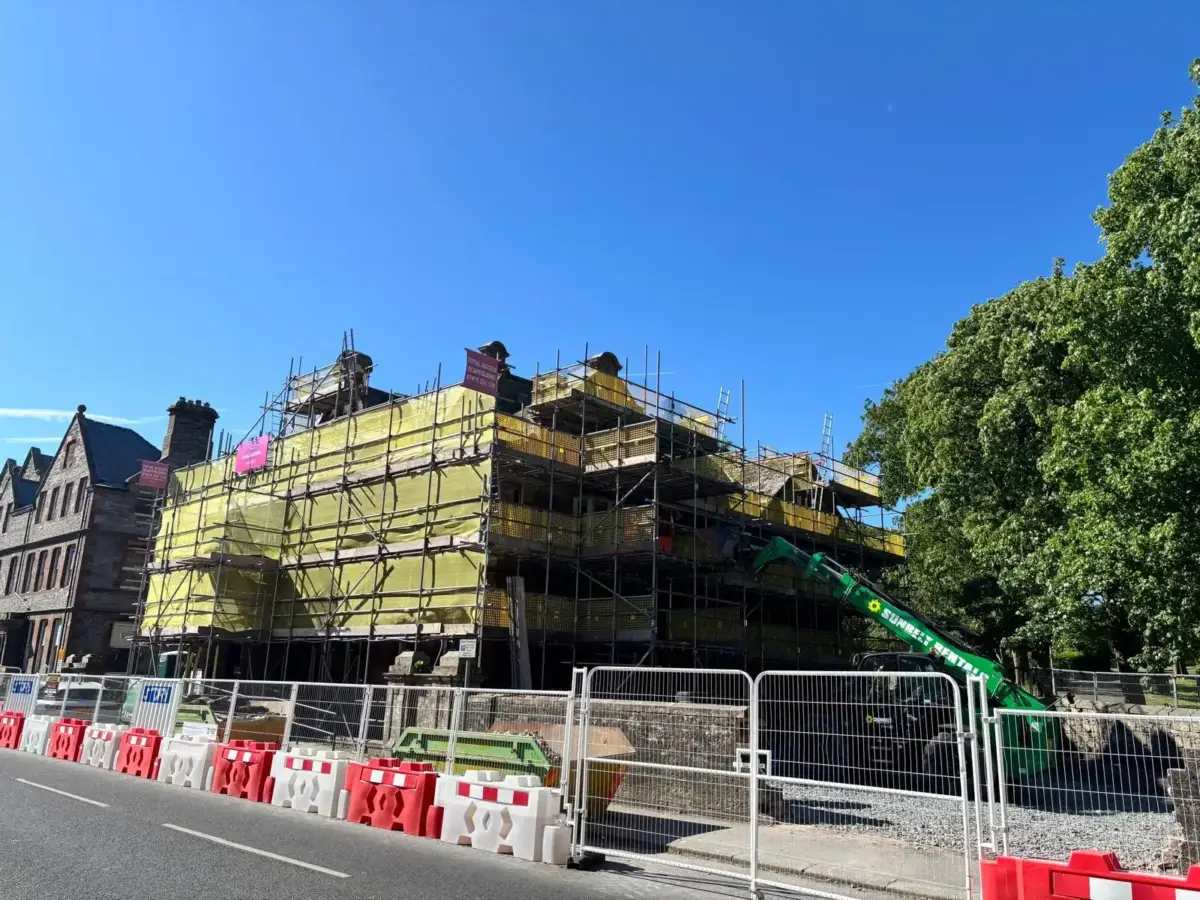
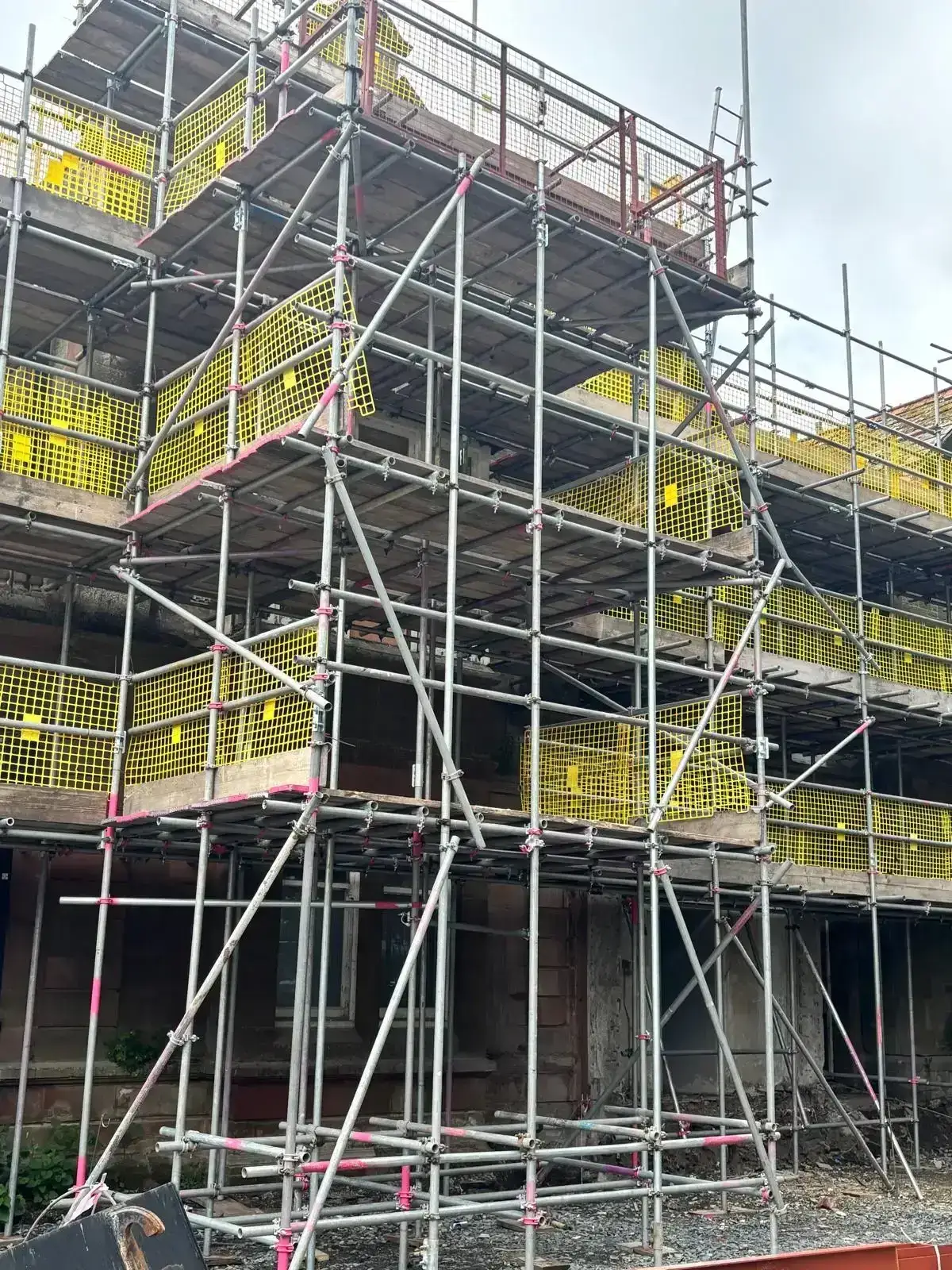
Heritage buildings cannot absorb the same treatment as modern construction. Lime mortar crumbles under pressure that would not trouble cement. Dressed stone develops surface blooms when ferrous metals rest against it. Timber frames can be crushed by incorrectly positioned scaffold loads. Original lead flashing, decorative plasterwork and stained glass are irreplaceable if damaged. Every one of these risks must be anticipated and eliminated before a single tube goes up.
We address these risks through careful pre-project survey, protective fitting selection and scaffold design for renovation projects that routes loads away from vulnerable features. Tube-to-stone contact points are padded with non-marking materials. Ties are positioned to engage with structural elements, avoiding decorative stonework, lime render and original joinery. Platform positions are planned to prevent scaffold boards scuffing window sills and string courses.
We can provide method statements for listed building consent applications, work alongside conservation architects and heritage consultants, and provide birdcage scaffolding for internal restoration works. Every heritage scaffold is formally inspected before handover and throughout the hire period. Our coverage spans the entire region — from Lancaster to Cockermouth and from Penrith to the coast.
Our heritage scaffold installations use independent scaffolding wherever possible, as it stands clear of the building face and avoids the need for through-ties into the historic fabric. Where ties are necessary, we use pad-and-plate fittings with non-marking protective layers between the scaffold and the building surface, particularly on insurance scaffolding projects. Tie positions are agreed with the conservation architect or building owner before installation.
For interior heritage work, birdcage scaffolding provides overhead access for ceiling restoration, cornice repair and decorative plasterwork without transferring scaffold loads to vulnerable floor structures. Temporary staging serves lower-level interior work. On heritage roofs, we design chimney scaffolding to access stacks without bearing on historic ridge tiles or fragile flaunching.
Yes — we produce detailed method statements describing our scaffold design, protective measures and installation procedure for submission with listed building consent applications. These documents explain how the scaffold will be erected, where it will contact the building and what protection will be used at each point. We can revise these to address any conditions imposed by the conservation officer.
We use non-marking protective pads at every point where scaffold tubes or fittings contact the building surface. Ties are positioned to bear on structural elements, not decorative render or soft stone surfaces. Where lime render is particularly fragile, we maintain a standoff gap between the scaffold and the wall face, using extended transoms to bridge over vulnerable areas.
Regularly. Many of our heritage projects involve direct collaboration with conservation architects, heritage consultants and conservation officers from the local planning authority. We attend project meetings, review scaffold proposals with the design team and implement any specific requirements relating to the building’s listed status or conservation area designation.
Yes. We have experience scaffolding buildings across all listing grades, including Grade I structures. The highest-grade buildings demand the most rigorous protective measures and the closest collaboration with conservation professionals. We approach every Grade I project with the level of care and documentation that the building’s irreplaceable significance demands.
Heritage scaffolding typically requires more time than standard scaffolding due to the additional protective measures, careful positioning and documentation involved. A scaffold that would take one day on a modern building may take two on a listed building. We account for this in our programming and pricing so there are no surprises. The additional time ensures the building is properly protected throughout the process.
Our heritage scaffolding service covers the full extent of our operating area, which includes some of England’s most important heritage landscapes. We work on listed buildings and conservation area properties in Cockermouth, Whitehaven, Keswick, Ambleside and Grasmere, Windermere, Hawkshead, Cartmel, Kendal, Penrith, Arnside and Lancaster.
Call 07415331135 to discuss your heritage or listed building scaffolding requirements. Or contact us via our contact page — we’ll arrange a free heritage survey and provide a detailed quotation. Find out more about us.
