
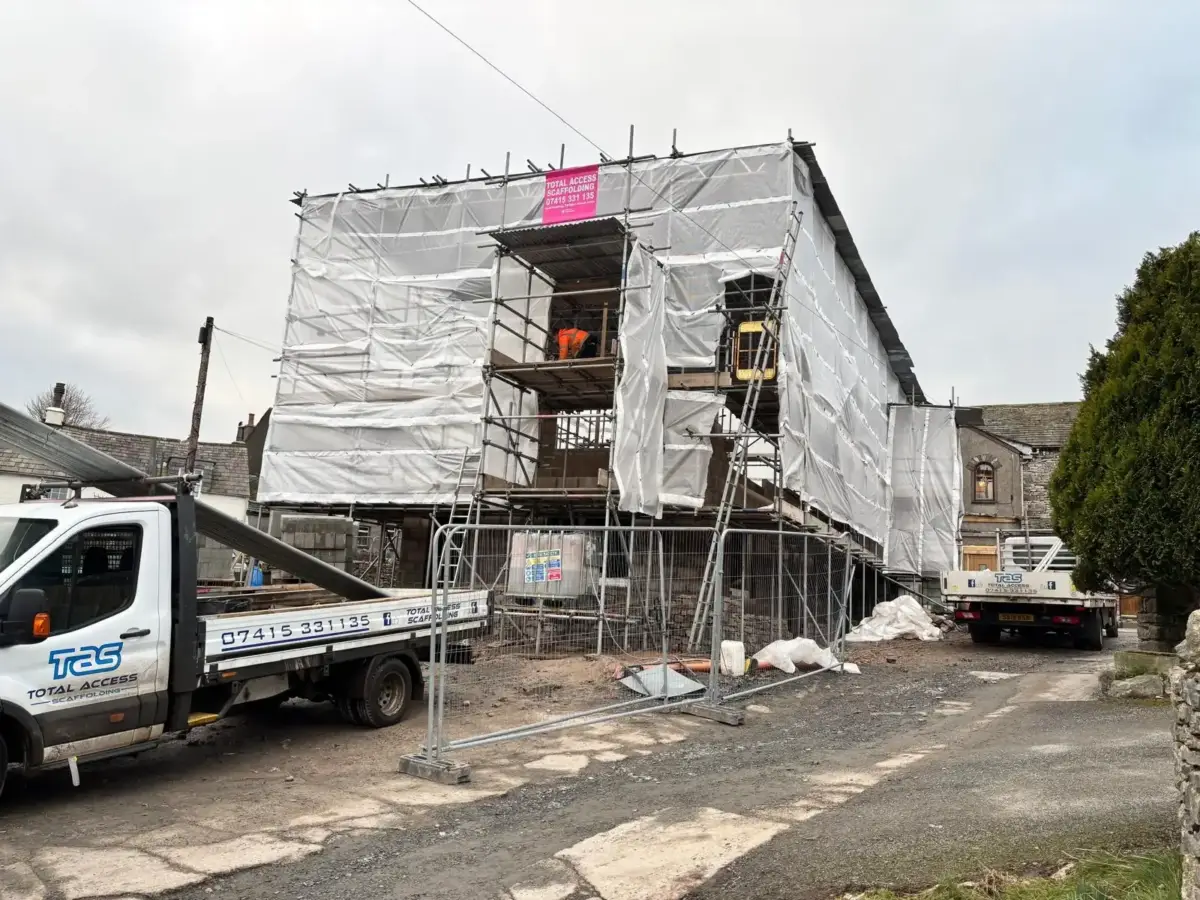
Canopy scaffolding combines a standard scaffold structure with a sheeted or boarded overhead covering, creating a weather-protected working environment or a covered access route beneath the scaffold for pedestrians, vehicles or building occupants. A canopy scaffold is used where works above would otherwise expose operatives or the open building to the weather, or where access below the scaffold must remain safe and covered throughout the works regardless of weather conditions.
Cumbria’s exposed long coastal areas makes weather protection particularly valuable for building projects in these areas. Atlantic weather systems bring sustained rain, wind and driving conditions that can halt unprotected external works for days at a time. A properly designed canopy scaffold significantly extends your effective working season and keeps your project programme on track. For the underlying access scaffold that the canopy sits on see our independent scaffolding page. For scaffold that spans a driveway or void below see our bridging scaffolding page. We design and erect canopy scaffolds throughout Cumbria and the Furness Peninsula for all types of residential, commercial and public sector projects. Call 07415331135 for a free site assessment.
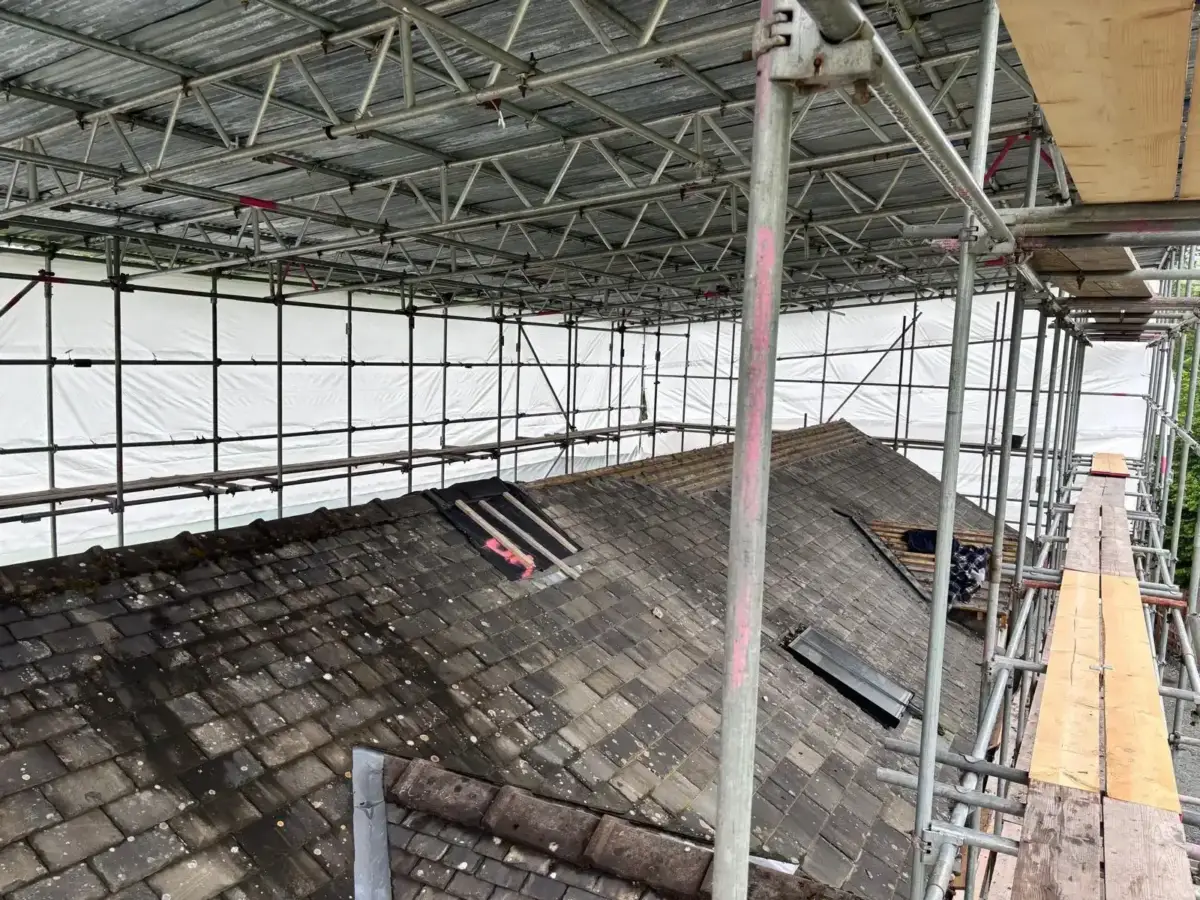
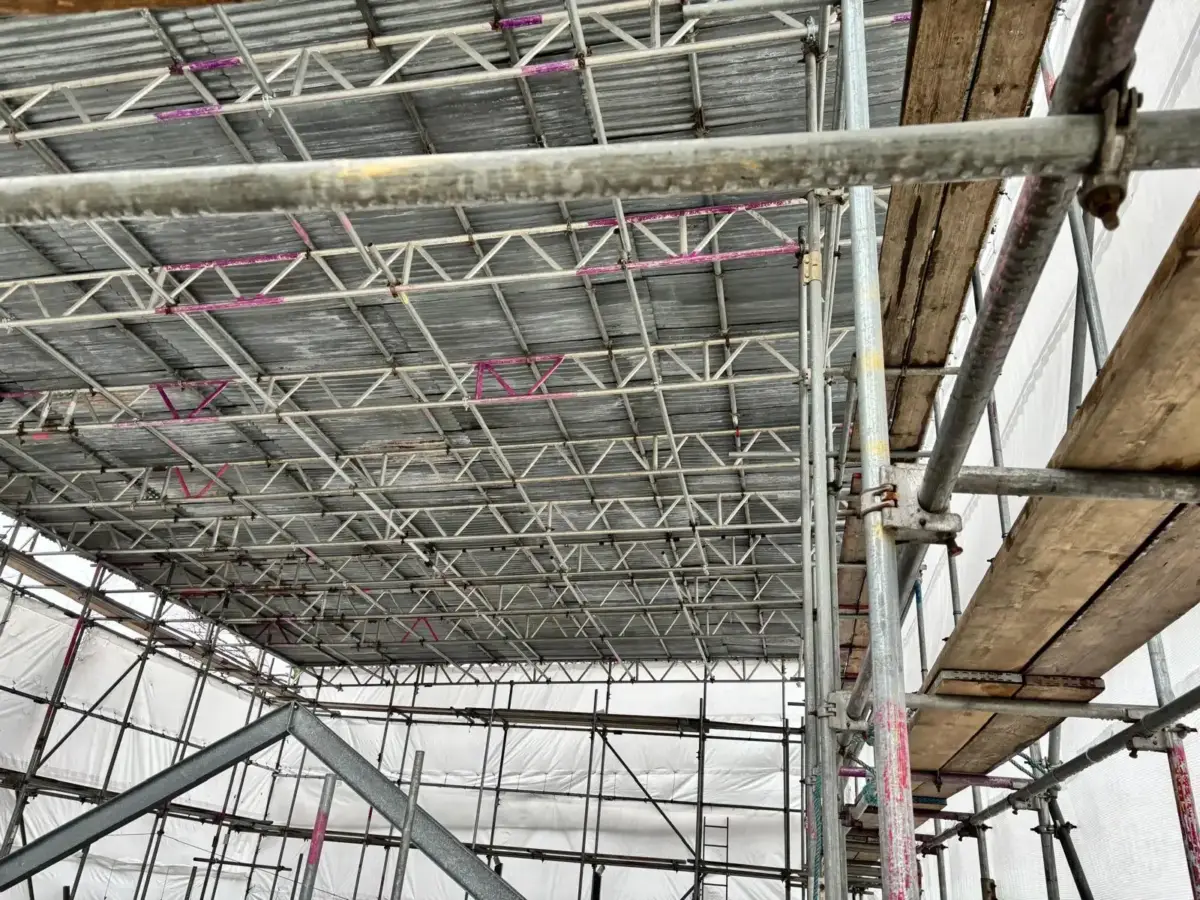
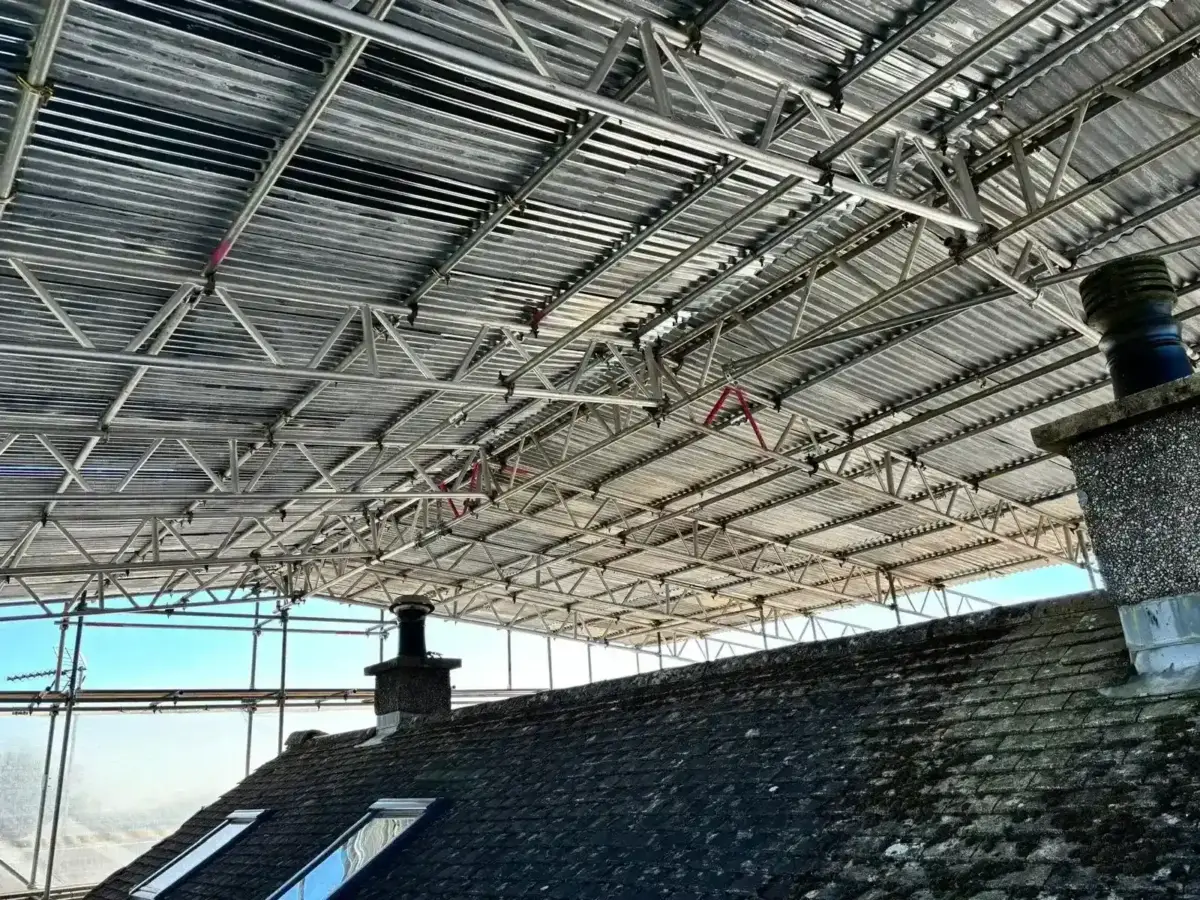
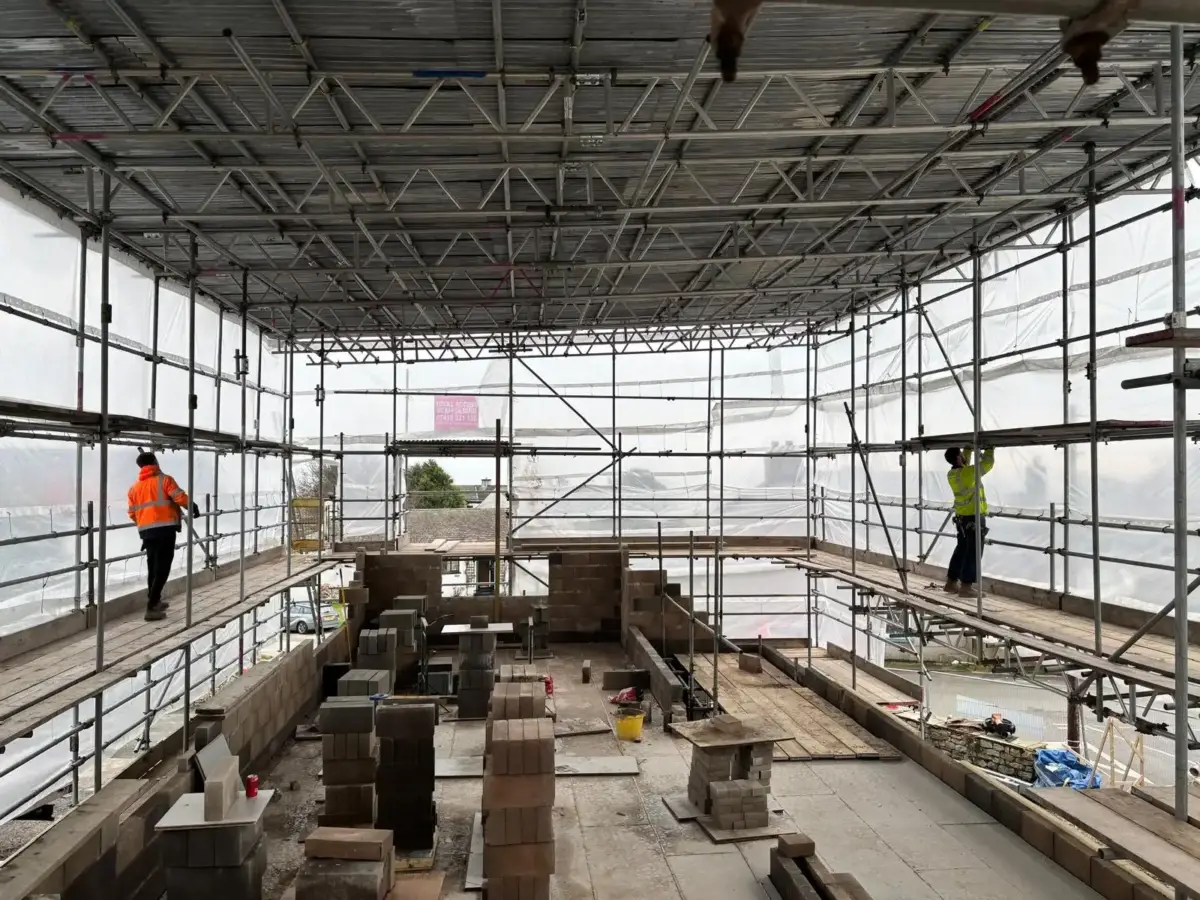
Canopy scaffolding design requires more detailed assessment than standard scaffold because the sheeting or boarding introduces significant wind loading into the structure. We carry out a full site assessment before designing any canopy scaffold, establishing the wind exposure of the site, the load the canopy needs to carry for commercial works, and the structural implications for the scaffold supporting it. Cumbria’s coastal locations makes this assessment particularly important — a canopy scaffold on an exposed Cumbria or Seascale site carries substantially more wind load than an equivalent structure in a sheltered inland location like Broughton-in-Furness.
We specify and fit appropriate sheeting or boarding materials for each application. Heavy-duty polythene scaffold sheeting is used for weather protection of working areas; boarded decks and fans for pedestrian and vehicle protection beneath the scaffold; breathable mesh sheeting where some weather protection is needed but air circulation must be maintained. We always use correctly rated scaffold ties to secure sheeting, and we check and retighten ties regularly throughout the hire period. For the underlying access scaffold see our independent scaffolding page.
All our canopy scaffolds are erected by CISRS-carded operatives in full compliance with the Working at Height Regulations 2005 and TG20:13 guidance. We manage all highway permit applications where required and provide full documentation including inspection tags, inspection records and handover certificates on every job. We also carry out unscheduled inspections after any significant storm event to check sheeting ties and the structural integrity of the scaffold framework throughout.
We manage the full process from design and permitting through erection, maintenance and collection.
We cover canopy scaffolding throughout Cumbria and the Furness Peninsula — from Haverigg and Silecroft to Kirksanton, Green Road and the rural communities inland. We also cover Barrow, Dalton, Ulverston, Askam, Grange.
Other scaffold types in Cumbria: independent scaffolding, birdcage scaffolding, chimney scaffolding, support scaffolding, hanging scaffolding, staircase scaffolding, bridging scaffolding, 8ft scaffold towers, 10ft scaffold towers, 13ft scaffold towers, temporary staging. Visit our Cumbria scaffolding hub for the full picture, or call 07415331135 for a free no-obligation site visit.
We offer polythene scaffold sheeting for weather protection of working areas, monofilament mesh sheeting for partial weather protection with air circulation, solid timber or steel fans for pedestrian and vehicle protection beneath the scaffold, and full boarded deck systems for overhead weather protection with walkthrough access below. The right specification depends on your wind exposure, the type of protection required and whether access below the canopy needs to be maintained. We advise on the correct specification at the site assessment stage.
Yes — canopy scaffolding involves additional materials, a more complex design process and greater wind loading which affects the structural specification of the whole scaffold. However, the cost needs to be weighed against the value of weather-protected working. In Cumbria’s coastal location, a project halted for days by adverse weather can be kept moving with a canopy scaffold, reducing your overall programme and the associated costs of delay. See our independent scaffolding page for the underlying scaffold structure.
Yes — a properly designed scaffold walkway or fan over a pavement is standard on Cumbria’s terraced streets. The scaffold must carry the loading from works above, a boarded or sheeted overhead covering must protect pedestrians below, and the walkway must meet minimum headroom requirements. A highway scaffold licence from Westmorland and Furness Council is required. We manage the full permit process and design the structure to meet all highway authority requirements.
Sheeting is secured using proprietary scaffold ties, clips and lacing systems designed specifically for scaffold sheeting. On exposed coastal sites like Cumbria we use a closer tie spacing than standard guidance requires, and we check and retighten ties after every significant wind event. Where a site is particularly exposed we may specify mesh sheeting rather than solid polythene to reduce the wind load on the structure. We assess wind exposure at every site visit and design the fixings accordingly.
We inspect every canopy scaffold immediately after any significant weather event. If a storm causes damage to the sheeting, ties or scaffold structure, we attend site promptly, make safe and carry out necessary repairs before work resumes. Contact us on 07415331135 if you have any concerns following adverse weather. Do not allow any operative to work on or beneath a canopy scaffold that has not been inspected after a storm — this is a requirement of the Working at Height Regulations 2005. Find out more about us.
