
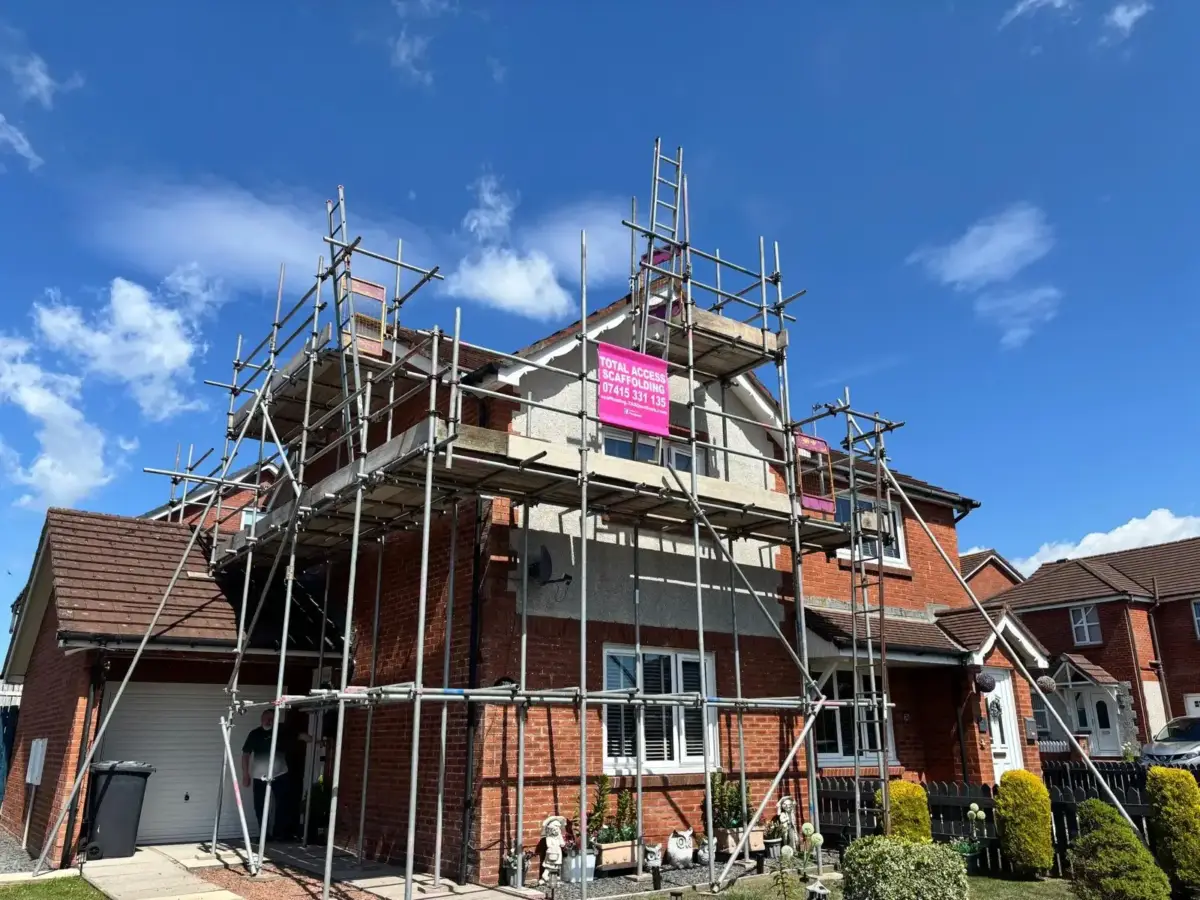
Independent scaffolding — sometimes called freestanding scaffold — is the most widely used scaffold system across Cumbria. Unlike tied scaffolding, which requires anchor points drilled into your building, an independent scaffold stands entirely on its own through a double row of vertical standards connected by transoms and ledgers. This creates a fully self-supporting structure that places no load-bearing stress on your building’s fabric whatsoever — making it the technically correct solution for Cumbria’s older stone-built housing stock where drilling into lime mortar should be avoided.
Much of Cumbria’s housing — Victorian terraces, stone cottages, older farmhouses and pre-war semis — was built with rubble-filled wall construction that cannot safely take scaffold wall ties. An independent scaffold eliminates that concern entirely. Whether you need a simple roof scaffold for a few weeks, commercial scaffolding for business premises, or a complex multi-lift system for a major renovation spanning several months, we design and erect the scaffold that fits your job and your building. Where your scaffold extends over a public footpath — common on Cumbria’s older streets — we manage the full highway permit process with Westmorland and Furness Council on your behalf at no extra cost. For chimney-only jobs see our chimney scaffolding page. For interior ceiling work see our birdcage scaffolding page. Call 07415331135 for a free no-obligation site visit.
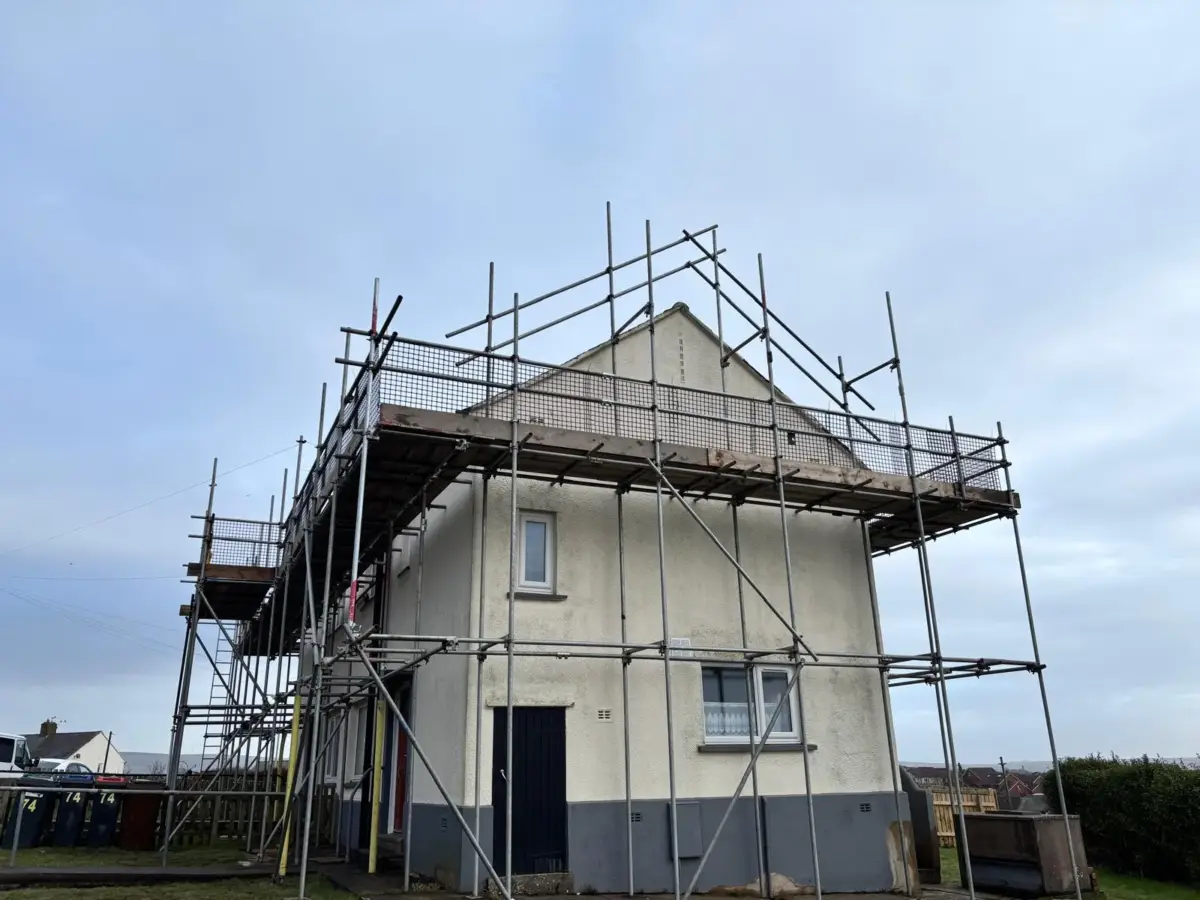

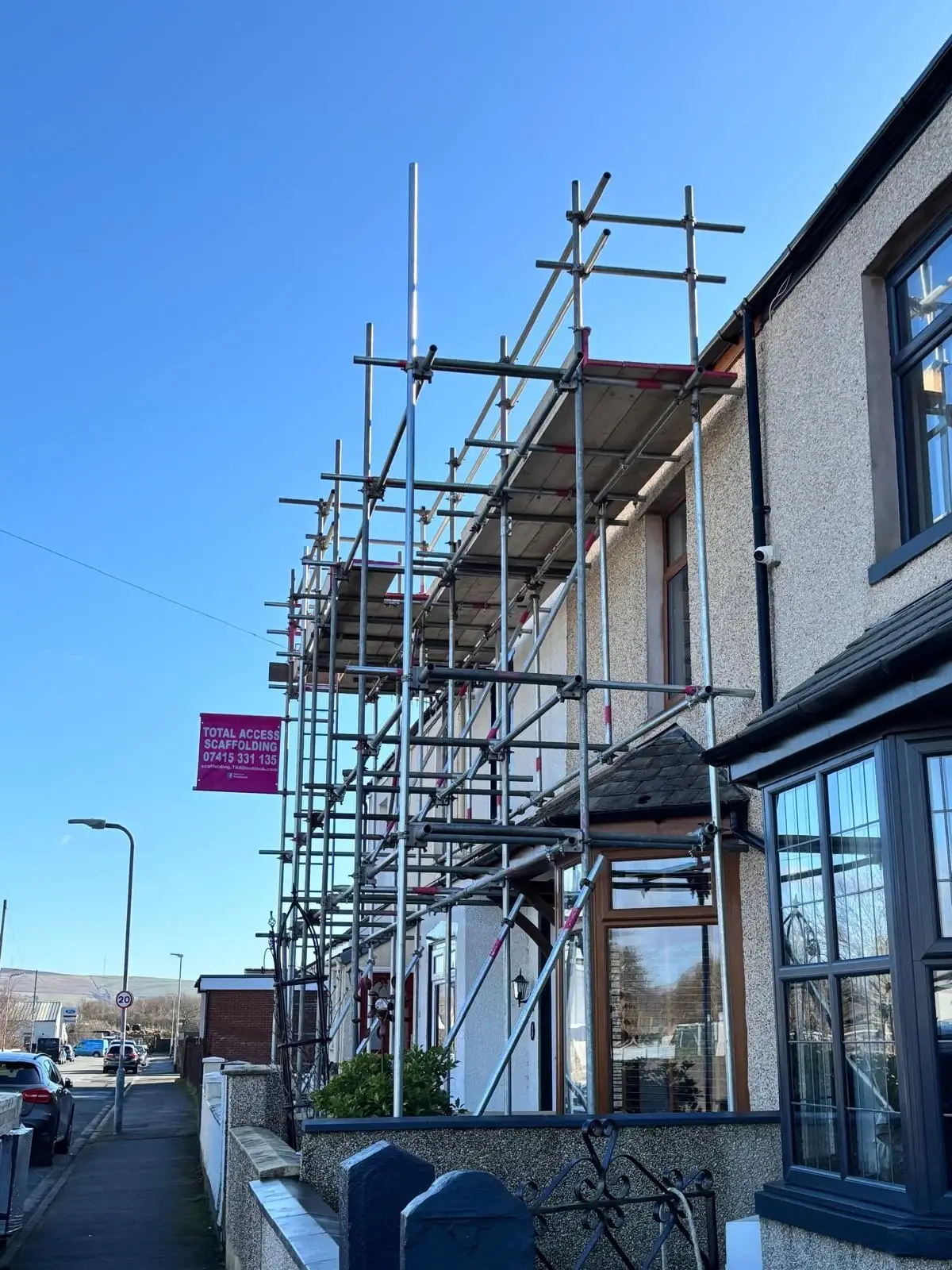
Every independent scaffold we erect in Cumbria begins with a thorough site assessment — a visit to your property by a member of our experienced team. We review the full access constraints, check ground bearing conditions on your driveway and pavement, identify drainage channels or soft ground that needs managing, and design a scaffold system that gives your contractor exactly the platform they need while causing minimum disruption to your household or business throughout the hire period.
Where your scaffold extends over a public footpath or pavement — very common on Cumbria’s older terraced streets — a highway scaffold licence from Westmorland and Furness Council is required before erection begins. We manage that entire process on your behalf at no additional charge, factoring the permit lead time into your programme so there are no avoidable delays. You do not need to contact the council at any point.
All our scaffolding is erected by CISRS-carded operatives in full compliance with the Working at Height Regulations 2005, TG20:13 guidance and all relevant British Standards. We provide a full inspection tag, written inspection records and a signed handover certificate on every job. We inspect every seven days and after any significant weather event — particularly important given Cumbria’s exposed coastal location. For projects requiring structural propping alongside access scaffold, see our support scaffolding service. For weather-protected working see our canopy scaffolding page. When your contractor finishes we collect promptly and leave your property completely clean with zero damage to driveways, gardens or boundaries.
We keep the process straightforward from your first call to the day we collect.
We cover independent scaffolding throughout Cumbria and the Furness Peninsula — from Haverigg and Silecroft to Kirksanton, Green Road and the rural communities inland. We also cover Barrow, Dalton, Ulverston, Askam, Grange.
Other scaffold types in Cumbria: birdcage scaffolding, chimney scaffolding, canopy scaffolding, support scaffolding, hanging scaffolding, staircase scaffolding, bridging scaffolding, 8ft scaffold towers, 10ft scaffold towers, 13ft scaffold towers, temporary staging. Visit our Cumbria scaffolding hub for the full picture, or call 07415331135 for a free no-obligation site visit.
Most of Cumbria’s older housing was built with lime mortar and rubble-filled masonry that should not have scaffold wall ties drilled into it. Tied scaffolding risks cracking lime joints, disturbing fragile masonry and creating water ingress paths. Independent scaffolding stands entirely on its own without any fixings into the building — the only technically correct solution for the vast majority of Cumbria’s existing housing stock. Our team has extensive experience of traditional Cumbrian stone construction. See also our support scaffolding if your project involves structural propping.
If your scaffold extends over a public pavement or highway — common on Cumbria’s older terraced streets — a highway scaffold licence from Westmorland and Furness Council is required before erection begins. Failure to obtain one is a legal offence. We manage the entire application process on your behalf at no extra charge, factoring the lead time into your programme so your project start date is not delayed.
A standard full-perimeter scaffold around a typical Cumbria two-storey terraced or semi-detached property usually takes one full working day to erect. Larger properties, complex roof geometry or difficult access may take a day and a half to two days. We give you an accurate timescale at the site visit and always confirm the erection date with you and your contractor in advance so your programme can be planned precisely.
Yes — one of its genuine advantages. Because it stands on its own structure it can be lifted, extended or reconfigured without full dismantling. If your contractor finds additional work once at height, or your project scope expands, we adapt the scaffold quickly and cost-effectively. We always provide a written quotation for any modification before carrying it out so you know the cost in advance. See our canopy scaffolding page if you need weather protection adding.
Contact us immediately on 07415331135. We will attend site as quickly as safely possible, assess the damage, carry out any necessary repairs, and re-inspect and re-certify the scaffold before your contractor returns to work. Do not allow anyone to use a scaffold that has been subjected to a significant impact or severe storm before it has been inspected by a competent scaffolder — this is a requirement of the Working at Height Regulations 2005. Find out more about us.
